A few months ago, I wrote a blog post about using AI for polish. The idea was to let AI help with taking care of lots of little details that can be tempting to skip in the rush to get a new feature out.
Lately I’ve been thinking about another good use for AI. Not to finish a feature, but to start one. There are some bugs or features that I know I’ve needed to work on. It can sometimes feel overwhelming. Where to start, what else to bump off the priority queue so I can start this new thing?
Two recent examples. I fired up the cloud version of Codex. This is the tool that you can give a prompt, and it’ll go off and start working on a new feature, then come back with a Git branch and GitHub pull request to review. It’s nuts and magical.
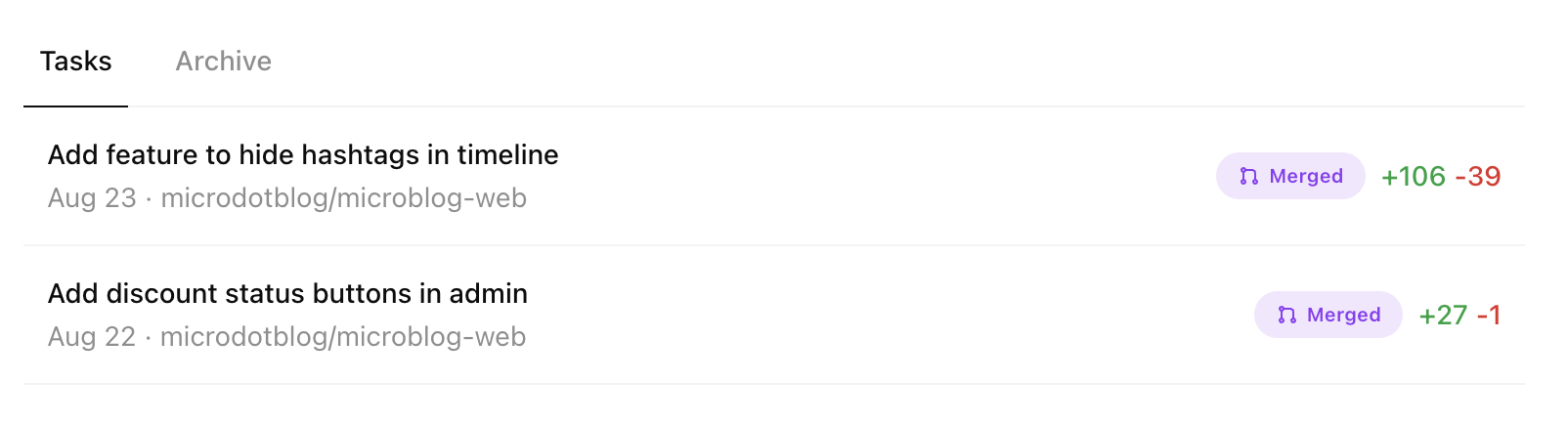
As a first test, I picked something very simple. I wrote a prompt that was about twice as long as the actual code change. When it worked, I picked something else more complicated, letting AI create a couple new files and methods.
Did it work perfectly? Nope! It was close, though, and I could go into the code that had been created, tweak the formatting, rename some things, fix bugs. It turned a slightly daunting task into a very simple series of tweaks, iterating on it (without AI) until I liked it.
I think this is going to be a powerful use of AI in the future. To brainstorm and draft. To get through the dip of something challenging. There is a lot of room to get coding help without necessarily going all-in and giving control to AI.